Thursday, April 25, 2013

Dog Reunites With Master After 10 Years


After 10 long years, Ginger the basset hound is reunited with her original dad in Nashua
Carpentier and Ginger
When Jamie Carpentier divorced with his wife 10 years ago, little did he knew that he would also lose custody of his Basset Hound, Ginger. After his former spouse got the puppy, she had the dog given up to a local animal shelter without Carpentier's knowledge.

The pup was soon adopted by an older couple who cared for her until they couldn't anymore. Ginger was once again sent to an animal shelter.

That's when Carpentier happened to check the listing of adoptable dogs on the Humane Society for Greater Nashua, N.H. He read about a Basset named Ginger. The dog is about the same age as the pup he once lost. After seeing the pictures, a connection was made.

Carpentier arrived at the shelter as Ginger was waking up from a nap. Her eyes lit up when she heard her former master's voice. Immediately, she ran to Carpentier and gave him a couple of licks and kisses.

"She knows who I am, she remembers my voice," Carpentier said.

The story was recently featured in the Nashua Telegraph. Click here for the full story.

Monday, April 22, 2013

Before Midnight Sets to Reprise Familiar Roles


Julie Delpy and Ethan Hawke reprise roles in the third installment of their "Before..." series. This one is titled "Before Midnight" which sees Celine and Jessie married with children and mid-aged nine years after they met up again in Paris on "Before Sunset" and 18 years since they first met on ""Before Sunrise." Surely a must watch for those "chick-flick-a-holics."

Read the GQ interview here. 


Julie Delpy was committed to making her new film, "Before Midnight," as authentic as possible. And according to Delpy, that authenticity included realistic sex scenes.

"Sometimes I see films where people have sex with a bra on. I mean, what country do they come from? I don't think I've ever had sex with a bra on in my life, except maybe once," Delpy told GQ's Lauren Bans in an interview published April 19th. "I've never actually showed my body that much, even though I'm a French actress. It was a big deal for me to do it. This movie isn't fantasy. This is a film for people who can handle a pair of tits." 

More From Huffington Post 


Pictures: Brabus SLS Biturbo


Check out these awesome media package from Mercedez Benz for the 2011 Brabus SLS Biturbo. 


Powered by the new BRABUS twin-turbo engine with 700 hp (690 bhp) / 514 kW and a peak torque of 850 Nm (626 lb-ft) and clad in the thrilling WIDESTAR wide-body version the Mercedes SLS AMG from BRABUS ascends to a new level in the league of super sports cars. 

The gullwing, further refined by an exclusive interior, reaches a top speed of 340 km/h (213 mph) and celebrates its world debut at the Geneva Motor Show 2011.

A high-tech turbocharger system for the high-tech engine of the SLS: The BRABUS engine engineers have designed a state-of-the-art twin turbo system for the fast-revving eightcylinder four-valve engine of the SLS. Read More...


Friday, April 19, 2013

Colmar - Literally Magical


Considered as the most beautiful city in Europe, Colmar in France exudes magic anywhere you look. This tiny Alcase town is famous for its color and vibrancy.

It's direct connection to the wine industry of France and its perfect climate makes it a famous wine drinking capital of the Alsatian Wine Route and an ideal place for wine production.

As if being the wine capital was not enough, Colmar, with its pretty squares, fountains and canals, is also called the "little Venice" (la Petite Venise). It is also the home town of Frédéric Bartholdi, who designed the Statue of Liberty, and the painter Martin Schongauer.

Photos:


How To Make The Hurricane


Here's an awesome spring/summer cocktail drink we stumbled upon recently. After trying out this concoction, all we can say is, "divinity." Yup, this one will make you very docile if not cranky because after delaring that the last glass is the last one, you'll be wanting to come back for more.

Introducing the tropical depression of all drinks that will surely perk anyone up -- The Hurricane.

So how do you make one glass of this fantabulous-oh of a drink?

You'll need:

1 oz dark rhum
1 oz light rhum
1 oz 151-proof rhum (any would do)
2 oz unsweetened pineapple juice or passion fruit juice
1 oz orange juice
2 tsp lime juice
1/2 tbsp sweetened syrup
1/2 tbsp grenadine
crushed ice

Combine all ingredients except the 151-proof rum in a mixing glass, and fill with ice. Shake well, and strain using a hawthorne strainer over crushed ice in a tall tumbler. Float the 151-proof rum on top, and garnish with a cherry and orange slice or just plain old lemon slice. The process usually take about three minutes. Enjoy.


Thursday, April 18, 2013

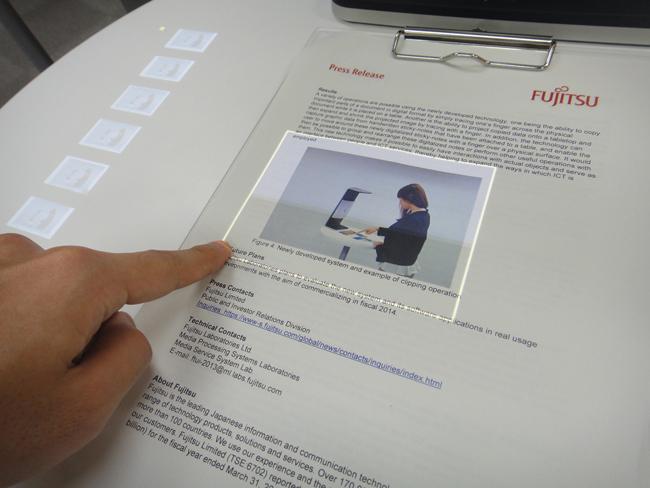
Turn Anything Into Touchscreen


We are very lucky to be alive at a time when technology rules the economic battleground. The competition that results from the rapid ascension of technological products benefits us with out-of-this-world gadgetry that seems like it was developed out of this world. 

Despite the fact that we have yet to find an asteroid to blow up before it blasts us into oblivion, we've come up with touchscreen technology on our phones, computers, television, etc.

In the latest installment of these fine advancements, Fujitsu has recently developed new technology that detects objects your finger is touching in the real world and turning that surface into a fully functioning touchscreen. This news was divulged by a recent DigInfo report.

For more, read the DigInfo report here.

Life of Pi is a Visual Masterpiece


Life of Pi, based on a novel by Yann Martel, follows the story of a young Indian boy who survives a disaster at sea by taking refuge in a small boat occupied only by a Bengal tiger. The film earned director Ang Lee the coveted best director award at the Oscars and is a visual feast for the eyes, but putting it together wasn't as seamless as it looked.

Lee and his team decided to create a massive wave tank. It was built on an actual runway at a Taiwan airport — in fact, it was carved into the middle of the runway. After spending four months to develop, a 250-foot-long, 100-foot-wide and 9-foot-deep tank was able hold up to 1.7 million gallons of water. One wall was even movable, so they could take advantage of sunlight.

Acting in the middle of these effects was challenging. Sharma was alone in the middle of the tank, floating on a small boat. During an intense wave scene, he didn't even have contact with the crew because he was so isolated in the tank. They could only communicate with him by blasting a loud air horn — one blast meant "cut" and two meant "go again," and takes were filmed one after another. Sharma also had to reset the scene himself, by replacing props after every take.

Mashable's Samantha Murphy had an insider interview with Director Ang Lee. For more on this, click here. 


Coolest Places To See On Earth 1


The world is filled with beautiful places to visit and discover. Here are a couple of beautiful places you probably don't know actually existed and may want to go see before you die.


1. Plitvice Falls National Park (Croatia) - more info


2. Wisteria Tunnel (Kitakyushu, Japan) - more info


3. Cinque Terre (Liguria, Italy) - more info


4. Tunnel of Love (Ukraine) - more info


5. Blue Lagoon Hot Springs (Iceland) - more info


6. Ball Pyramid (Lord Howe Island) - more info


7. The Great Barrier Reef (Queensland, Australia) - more info


8. Underground River (Puerto Princesa, Philippines) - more info

Wednesday, February 13, 2013

New Tax Law Travel Deals


With the world’s economy in shambles, affording the cost of travel for an exotic getaway is proving to be a challenge for the average household. 

The dollar may have stabilized compared to the Euro and the Pound; but the latest Congress-approved tax laws isn’t exactly peachy (although the new inheritance and gift exemptions will make any Warren Buffet wannabe jump for joy).

Europe’s top travel and tourism destinations can cost one somewhere around $3,000 per head a week. Australia isn’t getting cheaper anytime soon. And Japan, my dream destination, can cost anyone their life savings.

The rule of thumb is “if you can’t afford to travel, then don’t”…or use those credit cards you’ve been holding out on since the bubble burst. But having debts, especially credit cards debts, isn’t as practical as it used to be. But what if there are quality destinations you can afford left in this planet?

Welcome to the list of the most affordable tourist destinations you probably didn’t know in the age of the new tax law. This is a list of some popular exotic places in the planet that won’t cost you more than $100 a day.

Egypt

When you think about this African paradise, you imagine pyramids, camels, bazaars and sand -- lots of it -- all under the scorching Mediterranean sun. Sounds fun and expensive, right? Think again. What we didn’t expect is the cost of living in the land of Pharaohs and one of the world’s first cradles of human society.
Egypt’s hotels far outnumber the demand for it thus the price for a room won’t cost you an arm and a leg.


For $60 a night, you can get a deluxe double room in Luxor with a view of the Nile River and free breakfast. A private room by the Mediterranean Sea in Dahab will only cost you $20. The entrance for the pyramids is dirt cheap with prices ranging from $3 to $17, and some already includes a guide. A train ride from Cairo to Luxor for only $20. In terms of food, you can’t go wrong with street foods only costing you less than 5 cents to restaurant servings at $5 a plate. The best part about Egypt is that it’s not hard to spot a place to eat, stay or guides in the city because they will come find you.

Mexico

This Canadian favorite winter getaway is already a bargain even before the economy broke down in 2008. With the current exchange rate as it is, Mexico remains quite the deal. The tremendous bargaining power the U.S. Dollar has over the local Peso makes visiting truly worth it.

Accommodations and tour packages is affordable especially if you find a local colonial age themed city or a beach resort where natives are the dominant visitors. A three-course meal will cost you $5 to $8 at the local market. A nice hotel room is around $70 with breakfast and free wi-fi. A round of good ole’ fashioned cerveza for $5.

Thailand

This country is a popular destination for travelers of all budget levels. With the amount of deals on airfare, tours and hotels, Thailand remains to be one of the best bargains in the world. Everything is easy to find and there’s an abundance of coast lines for the ocean-loving tourist.

A standard double at a 5-star hotel in Bangkok will only cost $250 or less each night. Much affordable accommodations are also available for the intrepid tourists. If you are looking to satisfy your gastronomic cravings, Thailand is popular for its delicious street foods and oriental-style restaurants – and they’re literally dirt-cheap, for a lack of a better-term. A plate of pad-Thai is only $2, no kidding. Admission to the ruins in Sukothai is under $2 and it’s practically the same for most popular Buddhist temples. With the savings, you can take a train ride up north to Chi’ang Ma-i for only $40.

Everyone I asked about Thailand only have good things to say about visiting the country. With the cost of living in the country, you can get way much more bangs for your buck and more places to see.

Philippines

Our very own country boasts some of the best tourist destinations in the world but the lack of exposure means that there aren’t that many foreigners visiting and the cost of travel at a minimum. The country’s conversion also helps. The U.S. Dollar currently stands around $40 against the Peso and there’s quite a mileage for each buck spent.

The only drawback in the Philippines is that tourist destinations and traps are spread throughout the county but if you like to hop islands ala Amazing Race it can be paradise. Hotels are the same rate or just a few clicks higher than those in Thailand. Budget accommodations are also available. A jeepney (local transportation mode) is only 2 cents a way and inter-provincial travel won’t cost you more than $50 from Manila. Admission to public beaches is at $2 per head.


There’s plenty of everything here with the country being one of the most diverse culturally and gastronomically in the world. It is also considered as the one of the most-tourist friendly. A burger meal at a local fast food like Jollibee or McDonald’s is at $3 and most three course servings at restaurants won’t cost more than $10. What about the beer? A bottle of beer is only a buck for most pale pilsner brands.

Czech Republic

The costs of living in Europe’s big cities are often double that in the countryside. The Czech Republic is no different. While hotel and restaurant prices have gone up in Prague, it’s outside of the capital where one can truly find value. Yup, it’s a taste of Europe without the Euro price.

If you are looking to head outside the capital, visit a hilltop castle and stay in a hamlet close by. Most accommodations are $100 or less with breakfast. A 12-bottle wine tasting, my favorite, is only $20. With the savings, you can go on a cross country tour by train for $12 or less per way. Eastern Eurpoe is known for its exotic locally brewed beer and you can get a bottle for a dollar. Speaking of hill crest castles, the average entrance fee is only at $20. That’s quite the deal.

Peru

The temples of Machu Pichu aren’t the only destination of note in Peru. The country boasts its capital city, Cuzco, as one of the most beautiful cities in South America. But do you know that Peru offers guided trips to the Andes, the Amazon River and Nazca?

This country has the cheapest deals on this list. You can find some of the best quality rooms and hostels at $4 to $10 per night. The entrance to the Cuzco Inca Museum is only $2. When it comes to food, a big traditional lunch with beer is $7 while a simple meal at a countryside restaurant for two is only $6. That’s not the only offering. As mentioned, there are guided treks and tours to the Inca ruins, the Amazon, the Andes and Nazca lines. All of which won’t cost you more than $40 a head. Now, that’s a deal!

The Congress-approved fiscal cliff deal may have taken more out of some people’s pockets. The only shining light is the new estate and gift tax exemptions that allow one to gift a much larger portion of their inheritances without paying the taxes. At least with this deal, a regular employed American can still afford to travel the destinations I listed.

Before you talk to your estate planner, consult with a travel agent first.

Wednesday, January 23, 2013

Magical Sagada


Nestled in the heart of Mountain Province lies the quaint town of Sagada. Magical and hypnotic, Sagada offers breathtaking scenery. Cloud covered mountains, lush pine jungles, beautiful rice terraces, dramatic caves and waterfalls are all but just a few of the spectacular vistas one will find here. 

Just about a half day’s bus ride from Manila and 5 – 6 hours north of Baguio City, Sagada is a refreshing change from the grueling and the mundane, and offers plenty for eco-tourists looking to do some hiking or those simply seeking some peace and quiet.

The roads leading to Sagada can be quite treacherous and challenging as it snakes narrowly through the mountainous terrain of the region. While this proves to be intimidating, the town, once reached, is in itself a wonderful reward. The place is very laid back and quiet. It has a certain serenity, complimented by the charm and warmth of its Kankanaey natives. Those used to the hustle and bustle of city living will definitely appreciate the slow pace of life, the crisp and clean air, and the magnificent scenery.

The day starts with a spectacular sunrise viewing at Kiltepan and the rocky valley below where foamy white clouds hugging and cascading atop massive pine-forested mountains greet the sun as it rises at dawn.
For the intrepid explorer, the interconnecting caves of Sumaguing is usually at the top of the list. Spelunking through steep descents and climbs will always lead one to majestic geological formations. Those that don’t mind the macabre, the Sumaguing Cave also connects to the sacred Lumiang Burial Cave where ancient coffins are stacked atop one after the other inside inconspicuously.

Although not as impressive or as intricate as Banawe’s Rice Terraces, Sagada’s own terraced rice paddy fields are quite an spectacle. Undulating rice swaying with the wind in a seemingly endless sea of green will hypnotize and calm you to wonderment.

A few hours hike from the town center and through the rice paddies, one will find Bomod-ok Falls which is perhaps one of the most popular attractions in Sagada. Countless visitors brave the long and daring trek to admire the 200-feet tall column of water as it splashes down on the cold pools below.

At night, one can admire the stars that litter the clear skies of Sagada. With no pollution nor city lights to hinder stargazing, Sagada offers spectacular and dazzling views of the night sky.

Sagada has so much to offer. From eco-tourism, recreational cave exploration, cultural trip and so much more, Sagada is a destination worth visiting in one’s lifetime. There is no pollution here, no crimes, no loud noises…only the calm and serenity one couldn’t find anywhere else. 

The Igorots and Kankanaey natives are friendly and very hospitable. Their native cuisine and wines are marvellous and worth another serving. Sagada’s warmth and charm can quickly grow on you making leaving this place very difficult.

Tuesday, December 4, 2012

Subic Bay - A Tourism Mecca


Subic Bay, a major Philippine port in Zambales, has undergone extraordinary transformations from its origin as a tiny fishing village into the thriving commercial and tourism capital it is now. 

Covering an area expanse that stretches from the port of Morong in Bataan to the protected forest areas of Dinalupihan and Olongapo and all the way to the port of the town of Subic, the Subic Bay Metropolitan area or Subic Bay Freeport Zone (SBFZ) is exploding with so much tourism activities and attractions.

The Americans were the first to take notice of Subic Bay’s marquee location but not primarily for tourism purposes. The area is strategically facing the South China Sea with easy naval access to major ports in the region such as Manila, Tokyo, Shanghai, Singapore and Hong Kong. 

However, it’s not until the middle of the 20th Century that Subic Bay’s true potential was realized. From a small supply port during World War II, it became a major player during the Korean and Vietnam Wars. As it thrived, so is the City of Olongapo as jobs, money and supplies flowed into the city. The base too underwent a face-lift. 

More land was added and recreational facilities were built to accommodate the growing numbers of American Servicemen and their families. Outside, resorts and beaches reigned Subic Bay’s coastline becoming a favorite retreat for locals and foreigners.

When the Americans left in 1991 following the Mt. Pinatubo eruption, the area was an utter wasteland of volcanic ash and sand. A plan to restore the old naval base was put in place and by 1992, Republic Act 7227 (Bases Conversion and Development Act of 1992) was signed. 

The act establishes the creation of economic zones where the old American military facilities used to be. Today, Subic Bay (under the management of the Subic Bay Metropolitan Authority) and its environs has become a tourism Mecca and a major industrial-commercial hot spot due to its maritime accessibility.

While it boasts some of the best beaches in the Philippines and the world, Subic Bay houses world-class resort hotels, restaurants, shopping districts, theme parks and other tourist attractions. Truly, a haven for one seeking relaxation and recreation. Some popular attractions includes the Zoobic Safari Zoo, the Ocean Adventure Theme Park, the El Kabayo Equestrian Centre, shipwreck diving sites, The Subic Bay Lighthouse, The Subic Bay Marina and Yacht Club, Pamulaklakin Trail, The Old Spanish Gate, duty-free shops and major shopping malls, hundreds of restaurants serving local and international cuisines. 

The biggest city in the area is Olongapo with its many shops, parks, resorts and restaurants. The town of Subic offers beach resorts, a major fishing port and adult oriented forms of entertainment. Morong also features beach resorts and is currently being developed into a resort town by the Ayala Corporation.

I personally grew up in the area and I can vouch for the people's warm hospitality, the beautiful scenery and the conveniences of being there. One of the things I love about Subic Bay, and Olongapo city in particular is the transportation mobility. Although not as advanced as other countries, people can commute without the hassles of traffic congestion. So travel, come visit us and enjoy everything we have to offer. You'll be sure to love it here.


Wednesday, November 28, 2012

Movie Review: Departures


Death is inevitable. It is certain. Death is a sensitive matter. People know its coming but avoid talking about it. In terms of movies, we associate death with horror and thriller flicks meant to play with our imagination and strike our senses with fear. Then came the movie "Okuribito" or better known internationally as "Departures" by Yojiro Takita. This movie tackles the issues and realities of death in a different and loving light, endearing us to the different characters and their stories.
 
This is a movie worth watching, not by the dead, but definitely by the living.

Plot Summary (Spoiler Warning with some parts taken from Wikipedia.com)

Daigo Kobayashi (Masahiro Motoki), a professionally-trained cellist in Tokyo, loses his job when his orchestra is dissolved. He decides to move back to his hometown, Yamagata, with his wife Mika (Ryōko Hirosue). Daigo's family used to run a small coffee shop. His father ran away with the waitress when Daigo was very young, and his mother raised him by herself. His mother died two years ago, and left him the house where he grew up. Daigo feels guilty about not having taken better care of his mother.

Back home, Daigo finds an advertisement in the newspaper for "assisting departures". He goes to the interview, uncertain of the job's nature. He is hired on the spot after only one question ("Will you work hard?") and being handed an "advance" by his new boss Sasaki (Tsutomu Yamazaki). He discovers that the job involves preparing the dead or encofiination, the Japanese art of preparing dead bodies for cremation. Daigo reluctantly accepts. He returns to his wife and tells her he will be performing some sort of ceremony.
Daigo completes a number of assignments and experiences the gratitude of those left behind, gaining a sense of fulfillment. But Mika finds the DVD and begs him to give up such a "disgusting profession." Daigo refuses to quit, so she leaves. Even Yamashita, his old schoolfriend, tells him to get "a proper job."

After a few months, Daigo's wife returns, announcing that she is pregnant. She seems to assume that he will get a different job. While Daigo and Mika try to work things out, the telephone rings with the news that Tsuyako, Yamashita's mother, has died. In front of Yamashita, his family and Mika, Daigo prepares her body. The ritual earns the respect of all present, including his wife who now understands Daigo's new-found purpose in life. During cremation, Tsuyako's friend appears as the cremator. He thinks that death is not the "end" but the "gate to a next stage".

They are informed of the elder Kobayashi's death. Daigo refuses to see him, but his coworker convinces him to go, confessing that she herself abandoned her son in Hokkaido when he was only six. Sasaki invites him to take one of the display coffins. Daigo and Mika go to see the body of his father, but Daigo finds that he cannot recognize him. As the funeral workers carelessly handle the body, he angrily stops them, and his wife explains that her husband prepares the dead for burial as a living, thereby tacitly admitting that she has come to accept his work. Daigo takes over the dressing of his father's body, Daigo finds the stone-letter he had given to his father when he was little, in his father's hands. He is at last able to recognize his father from his childhood memory. As he finishes the ceremony, Daigo gently presses the stone-letter to Mika's pregnant belly.

My Take

Departures use death as a backdrop to tackle the age-old question of reaching one's ambition or to face one's reality. In the movie, Daigo eventually relents to the latter, accepting his place as a preparer of the dead and in the process learns to love his new "life's purpose". The movie also tackles other issues such as homosexuality, familial ties and abandonment, then ties everything up in the end flawlessly.

Despite the movie's simplicity (by Hollywood standards), it is never dull nor boring thanks to superb acting from Motoki (Daigo) and Tsutomu Yamazaki (Mr. Sasaki). The lines and dialogues are often short but easy to follow as acting never fails to deliver the descriptiveness needed to complete each scene. Director Takita obviously focused on the important bits leaving out over dramatization and too much scene clutter for the sake of effective cinematics. In that regard, the movie proved to be simple and profound without any pretentions. It is beautiful, inspiring and touching in every angle. The funny moments are effective while heavier dramatic scenes are moving. It subtly captures the quaintness and stoicism of Japanese culture and glamorizes encoffination that you'd most probably want to have the ceremonials done to you when you die. Of course, encoffination is an artform, much like the tea ceremony but intead of pouring tea for guests, you prepare a dead body instead.

In 2009, Departures won an Academy for Best Foreign Film. Unfortunately, it saw limited release in North America. I got my copy from on sale DVDs when Blockbuster Canada closed and I'm glad I grabbed that copy. Last night, it won my heart and my wife's tears. This is a movie worth watching, not by the dead, but definitely by the living.

Sunday, November 25, 2012

A Special Day In Bagac


Yesterday, my wife and I celebrated our first year of married bliss at Las Casas Filipinas de Acuzar in Bagac, Bataan. We got a rare complimentary private tour of the place plus a free night's stay. The weather was a beautiful 30 degrees warm, perfect for sun-lovers.

Getting there by local bus from the provincial capitol city of Balanga costs about P50 each and takes about 45 minutes through winding roads that snake around the mountainous terrain.


Amazing, scenic views of the countryside, the rice farms and Mt. Samat greeted us during the bus ride to Bagac. Coincidentally, Bagac was also celebrating it's town fiesta yesterday so I know we were in for a treat.

During the bus ride, we sat with these Koreans, a guy and a girl. They don't seem to be a couple and we didn't try asking. We didn't caught their names, but they would, for some reason, hook up with us throughout the day.

Bagac is a small quaint town. Its quiet and simple. There's not a whole lot to see but whatever the locals have, they proudly share it. Everything is small and packed in. There are hamlets spread about by the only road leading to and out of the town. Yet, being there gives you this snuggly feeling. Perhaps it's the warmth and friendliness of the people there to travelers. They are very accommodating and helpful to oblivious outsiders like us.
Something about this place truly brings people together.
Las Casas Filipinas de Acuzar (LCFA) is the town's pride. A tourist trap for the "can afford it" types. It's a resort-like community or a themepark of sorts. They call it a "Heritage Resort" and it features old houses from during the colonial age. Mansions or Casas aged hundreds of years from all over the Philippines are procured, photographed and demolished on location then transported and re-assembled piece-by-intricate-piece here for the public to enjoy.

For P650 entrance fee per head, you can be mesmerized and inspired by the now rare houses that are impeccably restored to their old glory. The Koreans entered the place with us paying the minimum entrance fee without the guided tours. They brought their own snack. The guy's backpack has a jar of kimchi and the girl was nibbling at crackers and navel oranges. We asked them to join our tour but they both opted to scout the place on their own.

Everyone is clad in traditional Filipiniana style clothing. The staff, who didn't mind me bugging them for photos, is friendly and helpful.  Being there feels like you are back in time to pre-independence Philippines. Of course, modern amenities are also given a colonial flare. There are restaurants and snack bars serving local and foreign (Spanish) cuisines. They have their own church for weddings and a mini golf course across the wooden grandfather-bridge. Since LCFA is located by the ocean, they have their own beach with white glowing sands. There's also a 4-foot deep swimming pool and a spa. The place is huge with at least 20 Casas and more still being built.

For P1500 per head, you can get a tour package of the place with buffet meals. We, on the other hand, got a special complimentary (private) tour with one of the executives, Ms. Olive who kindly showed us around--and it's quite a huge place. Statues of children playing and olden time Christmas ornaments decorate and bring a sense of the holiday festivities, complimenting the cobblestone roads that expanses the entire compound. She gave us a tour inside one of the new mansions, Casa de Lubao, and boy were we surprised. The furnishings are rustic, minimalistic yet beautifully designed with matching paintings from the era. So much care and attention to detail is obviously given to ensure authenticity.

After the tour, we ventured outside to the town plaza. We visited a local carinderia called Olive's Food House. As you might've guessed, it's Ms. Olive's mom's restaurant. She served us a hearty, delicious serving of menudo, sinigang, lechon kawali and liempo with matching atchara. Boy were we stuffed! Finally, we strolled the local beach strip.

We didn't stay long but we caught up with our Korean friends and hung out with them for a bit before heading back to the town poblacion for church, some "kasoy" shopping and the mardi gras parade. We spotted them later at the flea market haggling with local souvenir vendors.

At around six, we checked into our free room and enjoyed the rest of the quiet evening, reflecting on our beautiful and enjoyable day in Las Casas Filipinas de Acuzar. As we look forward to another year of marital bliss, over a cup of nightcap coffee, I jokingly proposed to my wife asking her if she'd marry me again. She answered amusingly, "of course, sweetheart."

And whatever happened to the Koreans, you wonder? We didn't see them after we spotted both at the flea market. I'm sure they had an interesting time with stories to tell about their Bagac adventure. My wife at least thinks serendipitously about it. Something about this place truly brings people together.
My wife and our son John with Ms. Olive
Me and my wife Aileen